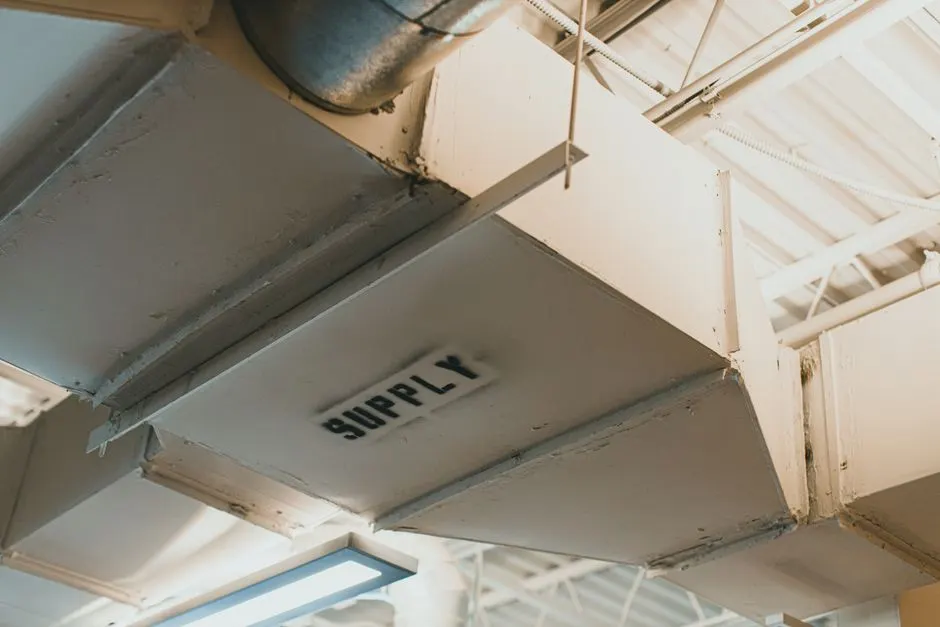
Cleaning HVAC ducts after a mold inspection means removing the mold colony, not just wiping visible spots. The aim is to remove contamination where practical, handle damaged porous materials appropriately, and correct the moisture source - usually a leaking air handler pan, an oversized system, or Fort Pierce's year-round humidity. Leaving contamination or moisture unaddressed can allow mold to return.
Most homeowners get the inspection report, see the word "mold" next to their air handler, and assume the whole system needs replacing. It rarely does. Below, we walk through exactly how our technicians clean ductwork after a positive mold test in Fort Pierce, what it costs in 2026, and the mistakes that turn a $700 job into a $4,000 one.
What a Mold Inspection Actually Tells You About Your Ducts
An HVAC inspection helps evaluate visible contamination and likely moisture sources; species identification requires appropriate sampling when useful. The lab report will list a spore count and a genus - Cladosporium, Aspergillus/Penicillium, and Stachybotrys are the three we see most in Fort Pierce homes.
What the report usually does not tell you is how far the growth has spread inside the duct runs. That takes a physical look. We pull the supply registers, drop a camera into the trunk line, and check the return plenum and the air handler cabinet. Mold almost always starts at the evaporator coil and the drain pan, then travels down the supply trunk on the airflow.
If you have not had an inspection yet, that is the first step, not the last. Our Mold Inspection & Testing Fort Pierce FL service includes air sampling, surface swabs, and a moisture map of the system. You cannot clean what you have not measured.
Why Fort Pierce Homes Grow Mold in Ductwork
Fort Pierce sits in one of the wettest humidity zones in the continental U.S. Average relative humidity here runs 74-78% most of the year, and that is the number that matters for ductwork. Mold needs three things: moisture, organic dust, and still air. Your ducts supply all three if the system is not running correctly.
Here is what we find on almost every job in this area:
- Oversized AC units. A system that is too big cools the house in 8 minutes and shuts off. The coil never runs long enough to pull moisture out of the air, so the duct interior stays damp.
- Clogged condensate drains. The drain pan overflows into the air handler cabinet. That wet insulation board is mold food.
- Ductwork in the attic. Attic temps hit 130-145°F in July. Flex duct with a torn vapor jacket sweats, and that condensation feeds growth.
- Return leaks in garages. A return pulling hot, humid garage air into the system loads the coil with moisture it cannot handle.
Older neighborhoods around the Indian River Lagoon and the riverfront blocks near downtown see this more than new construction because the ductwork is 20-30 years old and the flex runs have collapsed or torn. If you are in one of the newer developments west of I-95, the problem is usually the system sizing, not the duct age.
We also handle a lot of calls from Mold Remediation in White City, where the same humidity and the same 1990s-era ductwork create identical problems. The fix is the same whether you are east or west of the highway.
How Do You Clean HVAC Ducts After a Mold Inspection?
HVAC mold cleanup begins with assessing the affected components, containing contamination as needed, physically cleaning or replacing suitable materials, and correcting the moisture source. The order matters - vacuum before you spray, and fix the moisture before you close anything up.
Step 1: Isolate the system and contain the work area
Turn the air handler off at the breaker. Tape plastic over every supply and return register except the one you are working on. This keeps mold spores from blowing through the house while you clean. We use 6-mil poly and zip walls for larger jobs.
Step 2: HEPA-vacuum the duct interior
This is the step homeowners skip and it is the one that matters most. A shop vac with a standard filter just aerosolizes spores. You need a HEPA vacuum rated to 99.97% at 0.3 microns. We run a rotary brush head through every trunk and branch line, then vacuum the air handler cabinet, the blower wheel, and the evaporator coil.
Step 3: Apply an EPA-registered antimicrobial
After physical cleaning, the technician reviews the duct material and the product label before considering any antimicrobial treatment. Fogging is not a routine substitute for removing contamination, and mold-damaged porous duct materials may need replacement. The system is restarted only when cleaning and drying are complete.
Step 4: Seal the duct system
Every leak you seal is a moisture source you eliminate. We mastic-seal the plenum joints, tape the flex duct collars, and re-insulate any runs with a torn vapor jacket. In Fort Pierce attics, that vapor jacket is the difference between a dry duct and a wet one.
Step 5: Fix the moisture source
Cleaning without fixing the source is a 12-month rental. If the drain pan is cracked, we replace it. If the system is oversized, we tell you and recommend a manual J load calculation. If the return is pulling from a garage, we reroute it. This is the step that keeps the mold from coming back.
For full-system jobs - air handler, trunk lines, and every branch - we bring in our HVAC & Air Duct Mold Removal Fort Pierce FL crew. That service includes the vacuum, the antimicrobial, the sealing, and a post-clean air sample so you have documentation.
What Does Duct Cleaning After Mold Cost in Fort Pierce?
Typical 2026 pricing in this area runs $600 to $1,200 for a standard single-family home with 8 to 14 registers, and $1,500 to $3,500 if the air handler cabinet, coil, and plenum all need treatment. That range depends on three things: how many duct runs you have, whether the attic ductwork needs re-insulation, and whether we find a moisture source that needs repair.
Here is how the numbers break down on jobs we run in Fort Pierce:
- HEPA vacuum + antimicrobial fog, standard home: $600-$1,200
- Air handler and coil cleaning: add $250-$500
- Duct re-insulation in attic: $400-$900 depending on linear feet
- Post-clean air sample (lab): $150-$250
- Condensate pan or drain repair: $200-$600
If you have black mold confirmed on the report, the job is bigger. Our Black Mold Removal Fort Pierce FL service includes containment, negative air pressure, and disposal of any porous materials the growth has reached - usually the flex duct itself if the mold has penetrated the inner liner.
Common Mistakes Homeowners Make After a Mold Inspection
The most expensive mistake is spraying bleach into the ducts and calling it done. Bleach kills surface mold on non-porous materials, but it does not penetrate the dust layer where the colony lives, and the water in the bleach adds moisture back into the system. We see this on maybe one in five calls, and it always makes the job bigger.
Other mistakes we run into:
- Running the AC during cleaning. The blower pushes spores into every room. Turn it off at the breaker.
- Using a shop vac with a standard filter. You are spreading the problem, not removing it.
- Replacing the ductwork without fixing the moisture. New ducts in a wet system grow mold in one season.
- Skipping the post-clean test. Without a lab sample, you have no proof the job worked - and no documentation if you sell the house.
- Cleaning only the visible mold. The growth inside the trunk line is what recirculates through your house 8 to 12 times a day.
One more: do not run a fogger or ozone machine in an occupied home. Ozone is a lung irritant and it does not fix the moisture problem underneath the mold.
When to Call a Professional
Call a professional when the mold has reached the duct liner, when the air handler cabinet is contaminated, or when the inspection report shows Stachybotrys - the black mold species. Those three situations need containment, negative air pressure, and HEPA filtration that a homeowner cannot set up with box fans and plastic sheeting.
You can handle a light surface issue on a register grille yourself. You cannot safely handle mold inside a 30-foot flex run in a 140°F attic. The heat, the confined space, and the spore load make it a job for a crew with the right equipment.
Fort Pierce Mold Pros handles the full scope: inspection, duct cleaning, antimicrobial treatment, moisture repair, and post-clean verification. We work in Fort Pierce, White City, and the surrounding St. Lucie County area, and we tell you upfront what the job costs before we start.
If your system serves a home in one of the riverfront or South Beach neighborhoods, we also cover the barrier island and the communities north of the inlet. Homeowners in Mold Remediation in Vero Beach and the rest of the Treasure Coast call us for the same reason - the humidity does not stop at the county line.
Frequently Asked Questions
How long does duct cleaning after a mold inspection take?
The work schedule depends on affected components, duct materials, cleaning needs, and any replacement required. Add 2 to 4 hours of dry time before the system goes back on. Larger homes with attic ductwork or a contaminated air handler run 8 to 10 hours, sometimes split across two days.
Can I just replace the ductwork instead of cleaning it?
Replacement costs $2,500 to $6,000 for a typical Fort Pierce home - three to five times the cost of cleaning. Replace only when the mold has penetrated the flex duct liner or the ductwork is collapsed. If the interior is intact, cleaning and sealing is the right call.
Does homeowners insurance cover duct cleaning for mold?
Usually not unless the mold traces to a sudden covered event like a burst pipe. Slow leaks and humidity-driven growth are typically excluded. Most Fort Pierce homeowners pay out of pocket, which is why we quote the full job upfront before we start.
How do I know the mold is actually gone after cleaning?
You run a post-clean air sample and compare it to the pre-clean baseline. There is no single federal indoor mold-spore limit that establishes clearance for every building; a qualified assessor interprets results alongside the inspection findings. We include that test on full-system jobs.
Will the mold come back after the ducts are cleaned?
Not if the moisture source is fixed. Cleaning alone buys you 6 to 12 months in Fort Pierce's humidity. Repairing the moisture cause and maintaining the system can reduce the chance of mold returning, but continued moisture management matters.
Get Help With Mold Remediation in Fort Pierce
If your mold inspection came back positive on the ductwork, we can clean it, seal it, and verify the result with a lab sample. Call Fort Pierce Mold Pros at +1 772-262-4441 and we will schedule an inspection and give you a written scope before any work begins.
We handle Mold Remediation Fort Pierce FL for homes and small commercial buildings across St. Lucie County - from the riverfront to the western developments off Okeechobee Road.