You can remove black mold from bathroom tile safely by sealing the room, wearing proper protective gear, scrubbing the affected grout and caulk with a detergent solution or diluted bleach, drying the area completely, and fixing the moisture source. Mold cleanup focuses on physically removing surface growth and correcting moisture so it is less likely to return. In Fort Pierce, where indoor humidity regularly sits above 60% from May through October, bathroom tile is one of the first places mold shows up - and one of the easiest places to get rid of if you catch it early. This guide walks you through the tools, the steps, the prevention habits, and the warning signs that mean it's time to bring in a professional.
Why Black Mold Grows on Bathroom Tile in Fort Pierce
Black mold grows on bathroom tile because tile itself isn't the food source - the soap scum, body oils, dead skin cells, and paper facing on drywall behind the tile are. Add Fort Pierce's year-round warmth and humidity, and you have a surface that stays damp for hours after every shower. Mold spores land on that film and colonize within 24 to 48 hours of consistent moisture.
The Treasure Coast climate is the real driver. Fort Pierce averages 55 inches of rain a year, and indoor relative humidity often climbs past 65% during the summer. Bathrooms without a working exhaust fan or an open window hold that moisture against the walls. Grout lines, silicone caulk around tubs and sinks, and the bottom row of tile where water pools are the three spots we see mold most often.
Older homes near downtown Fort Pierce and along the Indian River often have cast-iron drains that sweat, original 1950s tile with failing grout, and windows that no longer seal. Newer construction isn't immune either - builder-grade exhaust fans that move only 50 CFM can't clear a 100-square-foot bathroom fast enough. If you're already dealing with mold in other parts of the house, our team handles Black Mold Removal Fort Pierce FL for walls, ceilings, and framing, not just tile.
Safety First: Gear and Preparation
Before you touch a sponge, seal the bathroom so you don't spread spores into the rest of the house. Mold spores are 1 to 20 microns - small enough to ride air currents through an open door and land on bedroom carpet or kitchen counters.
Here's the gear list we recommend for a small tile job:
- N95 or P100 respirator - a dust mask won't cut it.
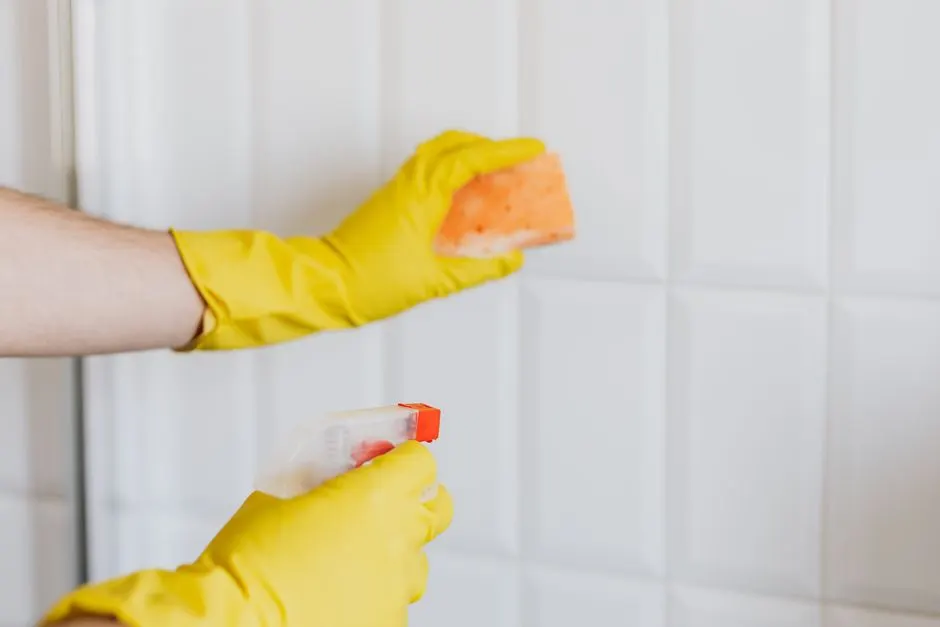
- Nitrile gloves and eye protection - bleach and mold both irritate skin and eyes.
- Plastic sheeting and painter's tape - cover the doorway and any HVAC vents in the room.
- Trash bags - double-bag everything you remove, including the sponge.
- Old clothes you can wash separately in hot water - or throw away.
Turn off the bathroom exhaust fan while you work so you're not pulling spores into the ductwork. If your home has central air, close the supply vent in the bathroom and tape over the return if there is one. Once the work is done and surfaces are dry, run the fan for 30 minutes to clear the air.
Step-by-Step: How to Remove Black Mold from Bathroom Tile
Work from the cleanest area toward the worst spot so you're not dragging mold across clean tile. Plan on 45 minutes to 2 hours for a typical tub surround, longer if the mold has worked into the caulk line.
- Ventilate and seal. Open a window if you have one, tape plastic over the door, and cover vents.
- Dry-scrub first. Use a dry paper towel or a HEPA vacuum to lift loose spores before you wet anything. Wetting dry mold just smears it.
- Mix your cleaner. For light surface mold, 1 cup of white vinegar in a spray bottle works. For heavier staining, mix 1 cup of household bleach (5.25% sodium hypochlorite) into 1 gallon of water. Never mix bleach with vinegar or ammonia - the fumes are dangerous.
- Spray and dwell. Let the solution sit 10 minutes. Bleach needs contact time to kill the colony, not just whiten it.
- Scrub the grout. Use a stiff nylon brush - not steel wool, which scratches tile glaze. Work in small circles along the grout lines.
- Rinse and inspect. Wipe with a clean wet cloth, then look at the grout under good light. If the black returns within a day or two, the mold is behind the tile and the grout needs to be cut out and replaced.
- Replace caulk. If the silicone caulk at the tub or sink line is black, cut it out with a utility knife, clean the joint with rubbing alcohol, and re-caulk with a mold-resistant silicone.
- Dry completely. Run the exhaust fan for at least 30 minutes and leave the door open afterward. Any residual moisture restarts the cycle.
If the mold has spread beyond the tile into the drywall or the ceiling below, that's a bigger job. Our mold testing Fort Pierce service identifies the species and the moisture source before any removal begins, so you're not cleaning the same wall twice.
Preventing Black Mold from Coming Back
Prevention in Fort Pierce comes down to three things: moving air, controlling humidity, and keeping surfaces dry. A bathroom that stays below 50% relative humidity rarely grows mold, even with daily showers.
Habits that work:
- Run the exhaust fan during every shower and for 20 to 30 minutes after. Upgrade to a 110 CFM fan if yours is builder-grade.
- Squeegee the walls and glass after each shower - 30 seconds of work saves hours of scrubbing.
- Leave the shower curtain spread out, not bunched.
- Fix dripping faucets and slow drains. A constant trickle keeps grout wet.
- Re-caulk tub and sink joints every 3 to 5 years, or sooner if you see cracking.
- Run a small dehumidifier in bathrooms without windows, especially from June through September.
If you've had a roof leak, a supply-line burst, or a toilet overflow, mold can show up in the bathroom ceiling or the wall cavity within 48 hours. That's when a call to a pro pays for itself. We handle mold removal Fort Pierce for water-damaged bathrooms, kitchens, and laundry rooms, and we fix the moisture source before we treat the mold.
Common Mistakes to Avoid
The most common mistake is painting over mold-stained grout or caulk. Paint traps moisture and the mold grows right through it within weeks. Other missteps we see:
- Mixing bleach and vinegar. This creates chlorine gas. Pick one cleaner and stick with it.
- Using a fan to dry the room while you clean. That fan spreads spores to every surface in the bathroom.
- Skipping the moisture fix. If you don't find and stop the water source, mold returns in 2 to 3 weeks.
- Bleaching porous surfaces. Bleach kills surface mold on tile, but it can't reach mold inside drywall, wood, or grout that's already saturated.
- Ignoring the HVAC. Bathroom exhaust ducts that vent into the attic instead of outside push humid air into a dark space where mold thrives. We see this constantly in Mold Remediation in White City homes built before 1990.
When to Call a Professional
Call a professional when the mold covers more than 10 square feet, when you can smell a musty odor in adjacent rooms, when the drywall or ceiling is soft, or when anyone in the house has asthma or a compromised immune system. Those are the thresholds where DIY cleaning stops being effective and starts being risky.
Fort Pierce Mold Pros handles bathroom mold the same way we handle every job: we find the moisture source, contain the work area, remove the mold and any contaminated material, and verify the air is clean before we leave. If the mold has moved into the attic above the bathroom or the crawl space below it, we treat those too - see our attic mold remediation Fort Pierce and crawl space mold remediation Fort Pierce services for the full scope. We also serve neighboring communities like Mold Remediation in Vero Beach and Mold Remediation in Stuart.
Frequently Asked Questions
How do I know if it's black mold or just mildew?
Dark-colored bathroom mold cannot be identified as Stachybotrys by appearance alone; different species may look similar. Mildew is powdery, gray-white, and stays on surfaces. If the growth is on grout and wipes off easily, it's likely mildew or surface mold. A mold test confirms the species.
Does bleach kill black mold on tile?
Bleach kills mold on non-porous tile and grout when left to dwell for 10 minutes, but it doesn't penetrate drywall or wood. For porous surfaces, use a detergent-based cleaner or call a pro. Bleach also leaves water behind, so dry the area completely afterward.
How much does black mold removal cost in Fort Pierce?
Typical 2026 pricing in Fort Pierce runs $400 to $1,200 for a small bathroom, and $1,500 to $4,000 if drywall or ceiling material has to be removed. Testing adds $250 to $500. Most insurance policies cover mold that stems from a sudden water leak.
Can I stay in my house while mold is being removed?
For a single bathroom with under 10 square feet of mold, yes - keep the door closed and stay out of the room. For larger jobs or mold in HVAC, plan to be out for 1 to 3 days while containment and air scrubbing are running.
How long does mold removal take?
A bathroom tile job takes 2 to 4 hours. If drywall, insulation, or an attic or crawl space is involved, expect 1 to 3 days including drying time. We verify moisture levels before we close up any wall.
Get Help with Mold Remediation in Fort Pierce
If the mold on your bathroom tile keeps coming back, or you've spotted it in the ceiling, attic, or crawl space, we can find the source and get rid of it for good. Call Fort Pierce Mold Pros at +1 (772) 262-4441 for a same-week inspection and a written scope before any work begins.