A musty odor that lingers after cleaning may be linked to hidden moisture, mold, damp materials, or HVAC conditions. An inspection can help identify whether the source is inside a wall cavity, attic, crawl space, or mechanical system. Masking the smell with candles, vinegar, or bleach only buys you a few hours; the mold colony keeps releasing microbial volatile organic compounds (MVOCs) into the air, and that is the actual musty smell you keep noticing.
Below we break down why this happens so often in Fort Pierce specifically, the five places the smell usually hides, the mistakes that make it worse, and how to get rid of it for good.
The short answer: you're cleaning the air, not the mold
Musty odor in a Fort Pierce home is a symptom, not the problem. Mold remediation is the process of locating, containing, and physically removing mold colonies and the moisture feeding them - it is not cleaning, and it is not fogging a room with an odor neutralizer.
Every mold colony releases gases as it digests organic material like drywall paper, wood framing, and dust. Those gases are what your nose picks up. When you wipe down a countertop or mop a tile floor, you remove surface dust and a small amount of airborne spores, but the colony behind the baseboard keeps producing. Within 12 to 24 hours, the smell is back.
That's why a home can smell clean in the kitchen and musty in the hallway two hours later. The source is in a different room than the smell.
Why Fort Pierce humidity keeps mold alive indoors
Fort Pierce sits in one of the most mold-friendly climates in the continental United States. Average outdoor relative humidity here runs between 70% and 80% for most of the year, and from June through September it regularly sits above 85% at night. Mold needs three things to grow: moisture, organic material, and temperatures between roughly 60°F and 85°F. Fort Pierce supplies all three year-round.
Indoor air conditioning helps, but it doesn't solve the problem by itself. An AC system that runs correctly keeps indoor humidity between 45% and 55%. When it runs short cycles, has a clogged drain line, or has an oversized unit that cools the house before it dehumidifies, indoor humidity creeps up past 60% - and that's the threshold where mold starts colonizing new surfaces within 24 to 48 hours.
Older Fort Pierce neighborhoods make this worse. Homes built before 1990 in areas like the Indian River Drive corridor and the older blocks near downtown often have original single-pane windows, minimal vapor barriers under the house, and attic insulation that has been wet and dried repeatedly. We see the same pattern in nearby communities we serve, including Mold Remediation in White City, where slab-on-grade homes with aging HVAC systems trap humidity in the same way.
The five hidden spots where musty odors actually live
When a Fort Pierce home smells musty and the visible rooms are clean, the source is almost always in one of five places. Our technicians check these in order because they account for the overwhelming majority of repeat odor calls.
1. The attic
Attic mold is the single most common hidden source we find in Fort Pierce. Roof decking, rafters, and blown-in insulation stay damp for weeks after a small roof leak, a failed ridge vent, or a bathroom exhaust fan that dumps humid air into the attic instead of outside. Attic temperatures in July can hit 130°F, which accelerates mold growth dramatically.
2. The crawl space
If your Fort Pierce home sits on a crawl space, that dirt floor is a permanent moisture source. Without a sealed vapor barrier, ground moisture rises into the joists and subfloor all year. Wood framing at 20% moisture content or higher will grow mold, and you'll smell it in the living room above.
3. Inside the HVAC system and ductwork
Your air handler pulls in humid Florida air, cools it, and pushes it through insulated ducts that sit in a 130°F attic. Condensation forms on the interior of the duct liner. Over a few seasons, that damp fiberglass becomes a mold reservoir, and every time the system runs, it distributes musty air through the whole house. This is why the smell is often strongest when the AC first kicks on.
4. Behind baseboards and inside wall cavities
A slow supply-line leak, a past window leak, or a roof leak that ran down inside the wall can wet the drywall paper and the bottom plate without ever showing a stain. The colony grows in the dark, and the odor seeps through electrical outlets and baseboard gaps.
5. Under sinks, behind appliances, and in closets
Cabinet interiors, refrigerator drip pans, washing machine pans, and closet walls that back up to a bathroom are classic low-airflow, high-humidity zones. These are small problems that turn into whole-room odors if left alone for a season.
Why does my house smell musty after mopping and wiping?
Your house smells mustier right after mopping because you're adding moisture to a room that already has a mold source, and because most household cleaners don't kill mold - they just wet it. A damp microfiber cloth lifts surface spores and dust, but the colony inside the wall or under the floor keeps producing odor the moment the air settles.
There's a second reason, and it surprises most homeowners: bleach and vinegar can make the problem worse. Bleach kills mold on non-porous surfaces like tile and glass, but on porous materials like drywall, wood, and grout, it only kills the surface layer. The roots survive, the moisture from the bleach feeds them, and the colony comes back thicker within a week. Vinegar has the same limitation on porous surfaces.
If the smell returns within 24 hours of cleaning, that is a strong signal the mold is inside a cavity or a duct, not on the surface you wiped.
What cleaning can and cannot fix
Cleaning is worth doing, but it has a clear ceiling. Here's the honest breakdown.
- Cleaning can fix: surface dust, pet dander, cooking odors, mild mildew on bathroom tile or shower grout, and small (< 10 sq ft) patches of surface mold on non-porous materials.
- Cleaning cannot fix: mold inside wall cavities, attic decking, crawl space framing, HVAC duct liner, or any colony larger than about 10 square feet - the EPA's own guidance says anything past that size should be handled by a professional.
If you've cleaned the same room three times and the smell keeps returning, the colony is behind a surface. At that point, more cleaning is just adding moisture to the problem.
Common mistakes that make the smell worse
We see the same five mistakes on nearly every musty-odor call in Fort Pierce, and each one either feeds the mold or hides the evidence.
- Running a humidifier or diffuser in the smelly room. You're adding the one thing mold needs most. Turn it off.
- Painting or caulking over a musty wall. Latex paint traps moisture against the drywall paper and accelerates growth behind the finish. The smell will come back through the paint within weeks.
- Bleaching porous surfaces. Bleach on drywall, wood, or grout kills the surface and feeds the roots.
- Turning the AC off when you leave for a week. Indoor humidity in Fort Pierce can climb past 70% in a closed house within two days. Leave the system running or install a dehumidifier.
- Ignoring a small roof or plumbing leak. A drip the size of a pencil tip can wet 10 square feet of attic decking in a month.
We also see homeowners spend hundreds of dollars on air purifiers and ozone machines before finding the source. Those tools help with airborne spores, but they don't remove a colony. The source has to go first.
When to call a professional
Call a professional when the musty smell returns within 24 hours of cleaning, when you can see discoloration on ceilings, baseboards, or attic decking, when anyone in the house has new allergy symptoms, or when the smell is strongest near an HVAC vent. Those four signals point to hidden mold, not surface mildew.
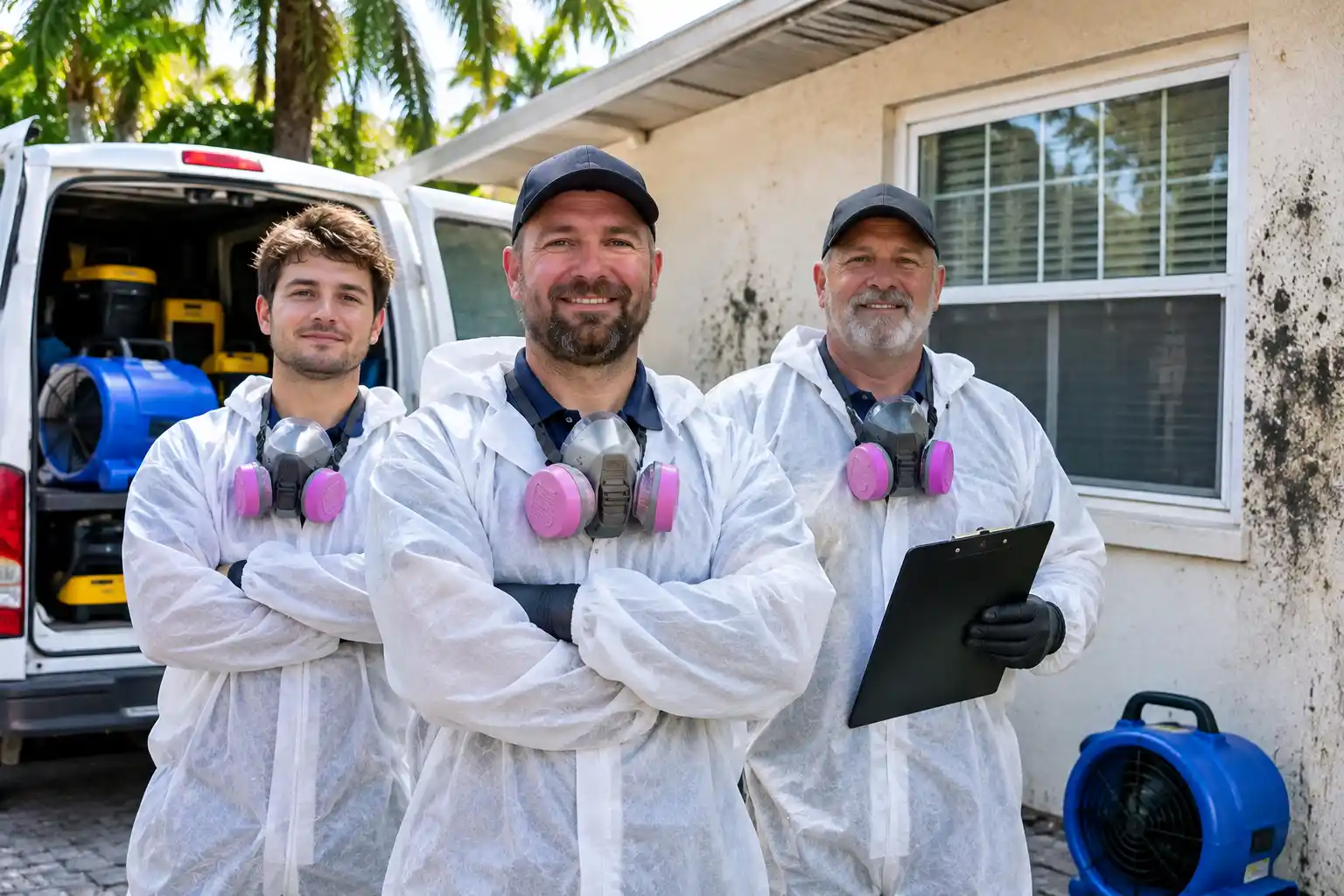
Our team at Fort Pierce Mold Pros handles this every week across the Treasure Coast. We start with a full Mold Inspection & Testing Fort Pierce FL to confirm what's growing, where it is, and how far it has spread - because guessing wastes money. From there, the fix depends on the location. Attic colonies get contained and removed without dragging spores through the living space. Crawl space colonies get the framing treated and a proper vapor barrier installed. Ductwork colonies get the system cleaned and the moisture source corrected so it doesn't come back next summer.
If the growth is confirmed toxic, we follow the same containment and removal protocol we use for Black Mold Removal Fort Pierce FL, including HEPA filtration and negative air pressure to keep spores out of the rest of your home.
We also serve the surrounding communities. Homeowners in Mold Remediation in Stuart deal with the same river-driven humidity we do, and the same hidden-attic pattern shows up there on nearly every call.
Frequently Asked Questions
Why does my house still smell musty after cleaning?
Sometimes the source is hidden mold or ongoing moisture in a cavity, attic, crawl space, or HVAC system. Surface cleaning removes dust and spores but leaves the colony and its moisture source intact, so the odor returns within 12 to 24 hours.
Does bleach kill mold and musty smells?
Only on non-porous surfaces like tile and glass. On drywall, wood, and grout, bleach kills the surface layer while the roots survive, and the added moisture can make the colony come back thicker within a week. Use a proper antimicrobial instead.
How much does mold remediation cost in Fort Pierce in 2026?
Typical 2026 pricing in this area runs $1,200 to $3,500 for attic or crawl space remediation, $400 to $900 for HVAC and duct cleaning, and $150 to $400 for inspection and testing. Whole-home remediation with reconstruction can exceed $6,000.
Can a musty smell make you sick?
Yes, for some people. Mold exposure commonly triggers sneezing, coughing, itchy eyes, headaches, and worsened asthma. If symptoms ease when you leave the house and return when you come back, that pattern points to an indoor mold source.
How long does professional mold remediation take?
Most Fort Pierce attic and crawl space jobs take one to three days. HVAC and duct remediation typically takes one day. Larger jobs with drywall removal and reconstruction can run four to seven days depending on the scope.
Get help with Mold Remediation in Fort Pierce
If your Fort Pierce home still smells musty after cleaning, the source is hiding somewhere you can't see - and it will keep coming back until it's removed. We locate it, contain it, and remove it so the smell doesn't return next season.
Call Fort Pierce Mold Pros at +1 772-262-4441 to schedule an inspection and get a straight answer on what's growing and what it takes to fix it.